Category Archives: Uncategorized

Bad Carbon Math: Alaska’s Forest Carbon Credit Program


COMMENTARY
published online in the Alaska Beacon, 9/21/2023

Gov. Dunleavy’s carbon math is bad

The Interior boreal forest is seen on Sept. 20. 2022, from an overlook along the Parks Highway on the edge of Fairbanks. (Photo by Yereth Rosen/Alaska Beacon)

 The Interior boreal forest is seen on Sept. 20. 2022, from an overlook along the Parks Highway on the edge of Fairbanks. (Photo by Yereth Rosen/Alaska Beacon)

Gov. Mike Dunleavy persuaded Alaska’s Legislature to create a carbon offset program that monetizes the carbon dioxide that trees on state land breathe in and the carbon they store through photosynthesis. His 10-year budget plan relies heavily on filling gaps from dwindling oil revenues with carbon credit cash. Speaking with journalist Nathaniel Herz, he made it clear that the program had nothing to do with climate change mitigation. 

As Herz wrote of Dunleavy: “Rubbing his thumb and forefinger together, he said the growing markets for carbon storage offer the state something it needs: money … ‘A lot of people’ believe that carbon emissions are driving global warming.” Herz wrote that Dunleavy is not one of them, but he wrote that the governor added, “Alaska is here to help them.”

People who do believe aren’t fooled into thinking that Alaska’s program will be helping to move toward the goal of zero net carbon by 2050 that the Intergovernmental Panel on Climate Change has warned will be necessary to prevent ecosystems from unraveling and severe weather from becoming catastrophic. The credits are a pay-to-pollute mechanism for offsetting “new” carbon emissions (including from the combustion of “old” fossil fuel carbon) or a greenwashing opportunity for companies to claim virtue while avoiding using less energy or the shift to clean, renewable energy sources.

Dunleavy projects that the state will receive billions of dollars in revenue by comparing the 145 million acres of state lands to the $100 million that the Sealaska Corporation was paid to “leave trees standing” on 165,000 acres for 100 years. Of the state’s 145 million acres, however, only about 125 million are inventoried forest lands. Four and a half million are classified commercial forestlands. Legislators were assured by Dunleavy the state will have its forest cake and eat it too; timber harvests won’t decrease. The threat to trees that are storing carbon which the state must prove for certification of carbon credits comes credibly only from the state itself. It’s more of a hostage bluff situation.

The Dunleavy administration is unlikely to leave a lot of trees standing for 100 years except for the ones they actually never planned to harvest. Alaska Department of Natural Resources Commissioner John Boyle wants to manage for more merchantable trees in Interior Alaska for future harvests. Where scientists see spruce bark beetles moving into Interior Alaska as a consequence of climate change, Boyle sees opportunities to harvest fire-prone, beetle-killed trees and live trees that might potentially be attacked by the beetles. The carbon offsets would presumably be sold on the regrowing trees. A preemptive cut-first approach will remove carbon storage that has to be recaptured through photosynthesis, setting back a carbon “break-even” point by decades.

The state can’t trade in the California mandatory cap-and-trade market. The voluntary international forestry carbon market is proving ineffective at actually offsetting emissions. A series of investigations reported by the nonprofit Guardian news outlet in January 2023, found “phantom” offsets in more than 90% of tropical forest projects certified by the industry’s leading standard and overestimates of the actual forest saved from removal by 400% per project. In August, they reported that since many of the offsets were “worthless,” demand had slumped. A whistleblower fraud and misconduct warning was issued in June 2023.

In the context of the goal of zero net carbon by 2050, the state carbon offset program has a good chance of complete irrelevance. The only reason for hope lies in the 10% of revenues the new law requires go into a renewable energy fund.

People who believe that carbon emissions are driving climate change can do the math. Companies who are greenwashing their continuing and new emissions don’t care. Dunleavy usually fails to mention that BP was on the other side of the Sealaska deal, offsetting 100 million tons of emissions from not only the Prudhoe Bay oilfield but also future development BP hoped to do within the Arctic National Wildlife Refuge. Australian oil company Santos’ website announced the forestry carbon offsets they purchased will make the Pikka oil field net zero for operations. It’s the use of the oil by consumers that will generate new emissions that won’t be offset.

In the context of business as usual in Alaska, carbon credits are a moneymaking scheme in the tradition of Soapy Smith. Money may well change hands in the flawed carbon market. Alaskans should expect more from Dunleavy, who taught math and science among other subjects. The only green math he’s doing is in units of cold, hard cash which might prove to be phantoms. It’s likely to be a big fat zero for the planet unless the 10% of carbon offset revenues that go into a renewable energy fund are wisely spent.

Leave a comment

Filed under Uncategorized

Blaming Moose for Climate Change

Leave a comment

Filed under Uncategorized

Fugacity: A precision of imperfection

Subscribe to continue reading

Subscribe to get access to the rest of this post and other subscriber-only content.

Comments Off on Fugacity: A precision of imperfection

Filed under Uncategorized

Responding to the Storming of the Capitol on January 6

Here’s a link to my article up on Medium’s Politically Speaking. The events on the Christian Day of Epiphany made me think about my own epiphanies when I participated in the anti-war protests in the 1970s. The government truths and lies being protested during this insurrection/coup were very different from those we protested then, but the structural racism of our society is depressingly the same.

My Epiphanies about Storming Buildings and Participating in the Resistance

Leave a comment

Filed under Uncategorized

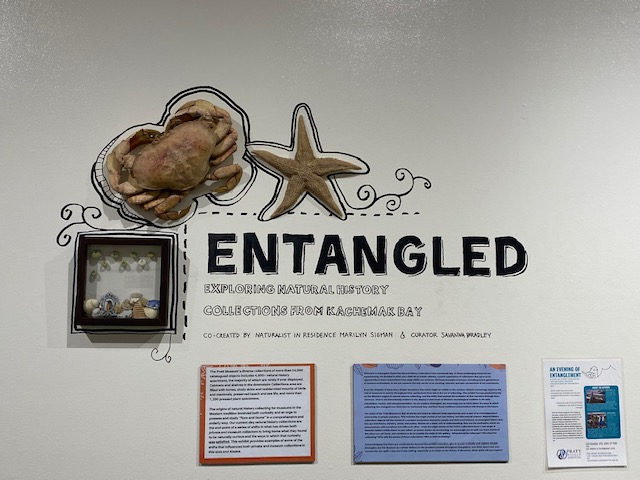
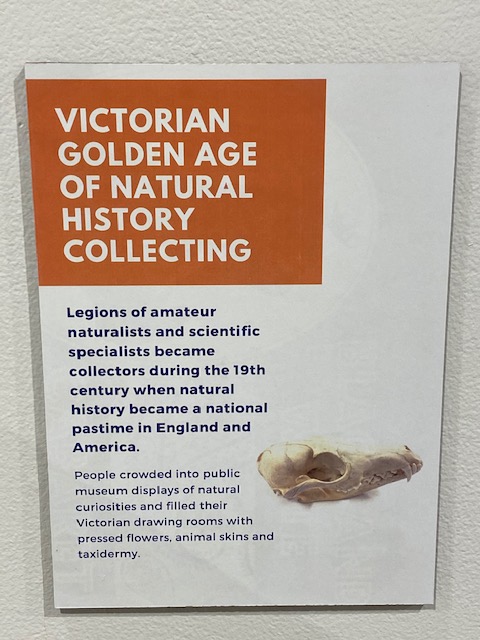
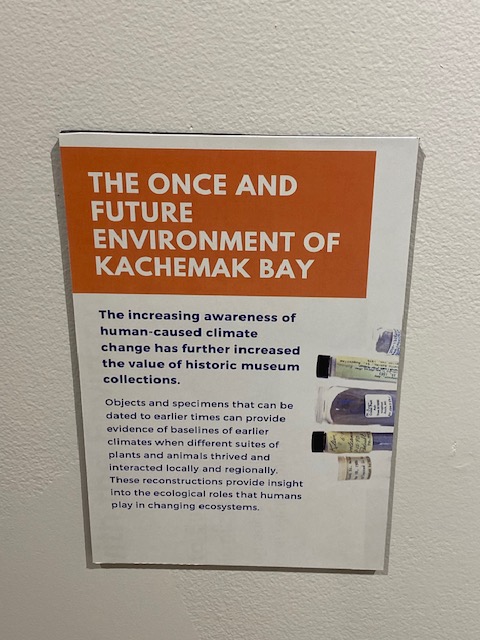
Entangled, the Museum Exhibit

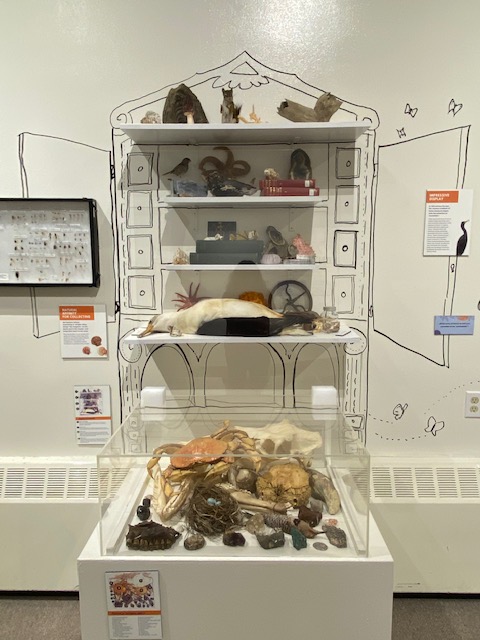
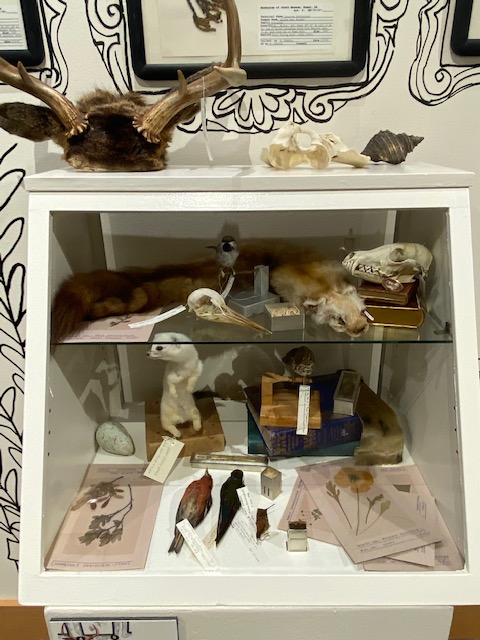
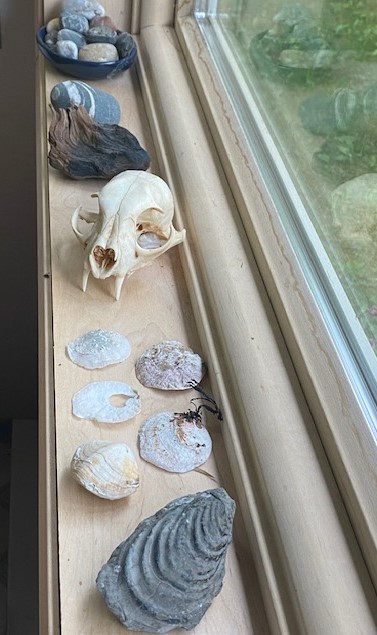
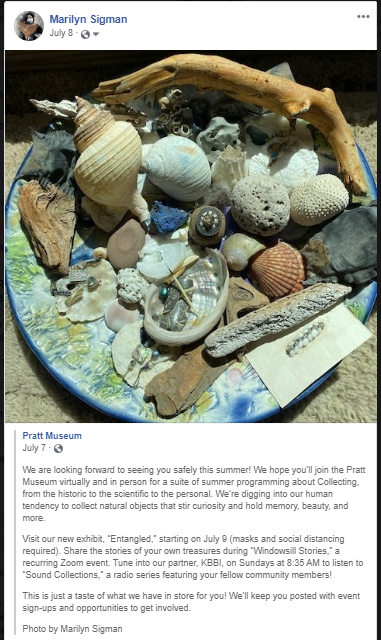
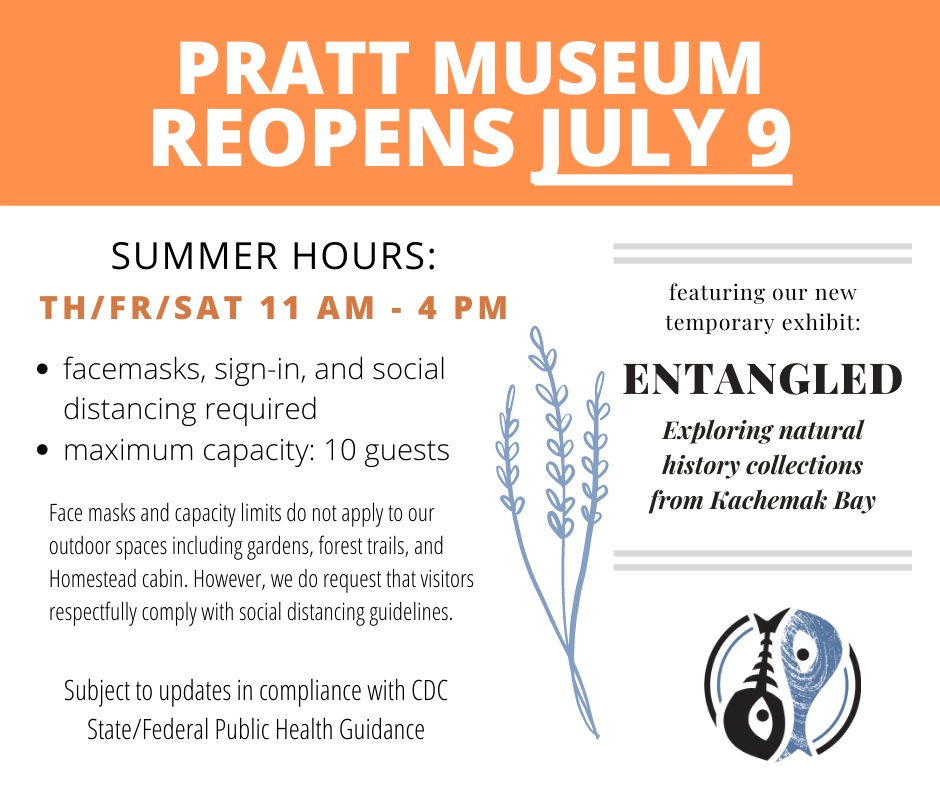
The COVID pandemic and the cancellation of a traveling exhibit provided me with an unexpected opportunity to work with my local museum – the Pratt Museum in Homer, Alaska – to co-curate an exhibit about natural history collecting in the local area. Museum curator Savanna Bradley and I selected objects from the 24,000+ specimens in the museum’s natural history collections to illustrate and explore the theme of shifting baselines in societal attitudes and museum practices on the collection, curation, and uses of natural history specimens. The exhibit opened on July 9 with COVID precautions in place and ran through September.

This image has an empty alt attribute; its file name is graphics.png


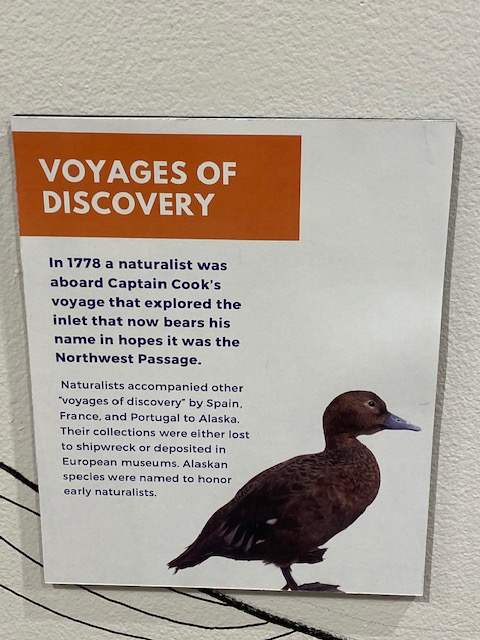
The exhibit focused on the “western” museum tradition that began as private “cabinets of curiosities” owned by European aristocrats. These became the nucleus of national public museums which received the scientific specimens collected by Russian and other European naturalists who first reached Alaska in the late 18th century through “voyages of discovery” by colonizing nations. After the U.S. purchased Alaska, American naturalists and scientists organized collecting expeditions on behalf of U.S. national museums to the territory of Alaska, including to Kachemak Bay, in the late 19th century. The Pratt’s collections began with the donations of private collections in the 1950s and they now serve the mission of a place-based community museum. Savanna, a talented artist, provided whimsical drawings of the “cabinets” typical of museum displays of different eras and additional artwork to tie the displays together.We gave museum visitors opportunities to ponder the future of natural history museums, as attitudes have shifted toward conservation of species once collected in large numbers and collections are beginning to serve as baselines to monitor changes related to a rapidly-changing climate.

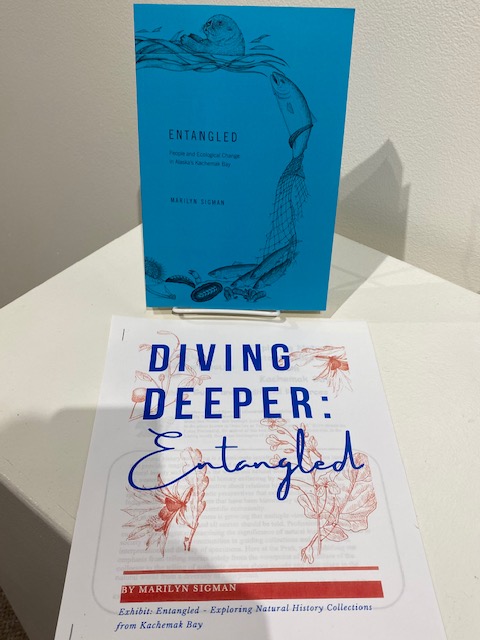
As we were developing the exhibit during a period of heightened attention to racist and colonial aspects of institutions, including museums, we decided it was important that the exhibit include an acknowledgement of the broader context of the western museum tradition as one rife with colonialism, racism, and misrepresentation. I also wrote an exhibit guide “Diving Deeper” to provide this broader context, with emphasis on the Indigenous knowledge and languages that were largely ignored until relatively recently and cultural aspects of scientific and common naming conventions.

Exhibit-related programs included:
– A First Friday virtual event in September featuring readings from my book and one by local author Nancy Lord from her book Green Alaska about the famous Harriman Expedition to Alaska in 1899: https://www.facebook.com/prattmuseum/videos/922866088122918/?comment_id=922907694785424&notif_id=1599278252239718&notif_t=comment_mention&hc_location=ufi  
– An on-going radio series “Sound Collections” was kicked off by my interview about my own collections in my “home museum” followed by interviews of a diverse group of other local collectors.

http://www.prattmuseum.org/education/sound-collections/


Leave a comment

Filed under Uncategorized

Full Kirkus Review

A veteran biologist and longtime Alaska resident explores the region’s Indigenous and natural history.

In this debut volume of nature essays, Sigman applies the ecology concept of “shifting baselines” – essentially, establishing a new sense of normal after a significant change-to her own life and to Homer, Alaska, and the surrounding Kachemak Bay, where she has resided for many years. The book’s pieces draw on the author’s work as a researcher and environmental educator. They focus on the connections between the changing populations of fish, mollusks, and marine mammals and the shifts in the human population, both the region’s Indigenous communities and the waves of settlers who have migrated from the United States mainland to Alaska for more than a century. The essays are both informative and enjoyable reads, as Sigman does an excellent job of conveying scientific topics to nonspecialist readers. “In the Spirit of the Lamp” shows how the prehistory of a location is deeply connected to its present. In “The Silver Horde,” the author makes an effective comparison between artificially breeding salmon and driving a Prius, each solving one problem while contributing to another. The prose is vivid (“Parents exchanged nest duties with courteous butler-like bows before the
stay-at-home mom or dad flew off to forage along the north shore”), and the essays provide a clear sense of place and belonging. Readers will discover that Alaska’s environmental problems are complex and layered, with competing interests vying for supremacy and outcomes that are clear only in the long term-halibut overfishing, for instance, or the challenges of managing salmon hatcheries. “The Bidarki Story” is one of the collection’s strongest essays, following a graduate student’s shellfish research that succeeds by treating the Indigenous bidarki harvesters as scientific partners rather than passive subjects. Readers who have never been to Alaska will come away with a clear sense of the landscape and the wildlife and people who inhabit it as well as an appreciation for the work of ecologists.

A well-written and deeply intriguing collection of essays on humans and nature in Alaska. – Kirkus Review

Leave a comment

Filed under Uncategorized

Entangled Wins the 2020 John Burroughs Medal!

Burroughs Medal

I was thrilled to learn that my book Entangled: People and Ecological Change in Alaska’s Kachemak Bay was selected for this award given to one book a year for distinguished natural history writing by the John Burroughs Association! It joins a list of awardees that began in 1926 with William Beebe’s Pheasants of the World and which includes Rachel Carson’s The Sea Around Us, Aldo Leopold’s Sand County Almanac, Barry Lopez’ Of Wolves and Men, Loren Eiseley’s The Firmament of Time, and the many other natural history writers who have inspired me in my writing and conservation efforts.  The inspirational Alaskan writers who have received the award include Adolf Murie (A Naturalist in Alaska, 1963), Victor Sheffer (A Year in the Life of a Whale, 1970), the (sadly and recently) late Richard Nelson (The Island Within, 1991) and Sherry Simpson, my teacher and mentor in the UAA Creative Writing and Literary Arts MFA program, for Dominion of Bears in 2015.

The award luncheon originally scheduled on April 6, 2020, at the Yale Club in New York City was postponed due to the COVID pandemic and is tentatively re-scheduled for April, 2021.

Leave a comment

Filed under Uncategorized

“Stray Hopes” Essay Accepted for Salmon Shadows Art and Humanities Project

“How have we developed our collective salmon narratives, what are these narratives obscuring, and how can we bring these shadows into the light?” This was the call to artists and writers issued by the Alaska Humanities Forum and Alaska Salmon Fellows in March, 2018. “As Alaskans,” the call continued, “we typically tell positive salmon narratives and we often neglect the matching dark sides of our stories, like the struggles for sustainability, equity, and resource management.” The literary submissions and visual art selected will be part a traveling Salmon Shadows exhibit, with publication to follow in  FORUM magazine. 

The “Stray Hopes” essay I submitted that was accepted was an excerpt from the “The Silver Horde” chapter in my book Entangled on the history of Alaskan salmon fisheries and management. The dark side of the story told in “Stray Hopes”  is the potential for ecological consequences on stream and marine ecosystems that shadows the faith placed on hatcheries to boost Alaska salmon production.


Leave a comment

Filed under Uncategorized

KUAC Northern Soundings Interview

Robert Hannon interviewed me in Fairbanks and added the interview to his 2018 Earth Day podcast in between conversations with researcher Kimberly Maher on the effects of climate change on birch sap, and with Fairbanks singer, educator, and environmentalist Susan Grace. My conversation with Robert begins about 14 minutes in the podcast at https://northernsoundings.com/2018/05/01/earth-day/.

Leave a comment

Filed under Uncategorized

Homer Tribune Author Interview

March 9th 1:32 am | Christina WhitingPrint this article   Email this article

Watching climate change affect the place she loves, Marilyn Sigman responded by writing a series of essays, which have just been published as a book, “Entangled: People and Ecological Change in Alaska’s Kachemak Bay.”

Entangled looks at climate change over time through the different cultures that have existed in Kachemak Bay and how environmental changes influenced their staying and leaving, as well as the extent to which marine ecosystem change was caused by humans, both local and distant, as participants in the ecosystem?

“Through writing about the history and current reaction to climate change, I hoped to share the story, encourage others to connect to and care for the place in the same way and figure out how to cope with my feelings around climate change,” she said?

Sigman’s book goes full circle, from the entangled history of sea otters, bidarkis and the Sugpiat people in Nanwalek and Port Graham into an examination of the history of sea otters, kelp beds, sea urchins and humans in the North Pacific Ocean on a much longer timescale. It looks at the ecological interactions that took place not only during the earlier times of people in Kachemak Bay, but at the time that industrial-scale fisheries for herring, halibut, and salmon began.

“We are entangled with wild animals by our very uses of them, some of them not even tangible,” she wrote. “It’s a greater ecology constructed of human desires that have always coexisted with our need to fill our bellies.”

Sigman sees her book as a platform to discuss the psychology of climate change and of moving together through the grief process associated in facing loss.

“Reflecting on the past can help us think about the future in a different or more nuanced way,” she said. “Nature is dynamic, so if you can connect and stay connected with it, you can come out with a better understanding of what is required to keep the places we love as naturally-functioning as they can be with all the ways that people are altering the rest of the ecosystem.”

Raised in Montana, Sigman grew up in nature influenced by time spent fishing with her father.

“He would park me on the bank with a can of worms and a fishing pole and disappear around the bend,” she said. “I would get bored and start looking around me, noticing the bugs and birds and plants and I learned to pay attention to nature.”

In 1974, she moved to Alaska to study wildlife management at the University of Alaska Fairbanks. After completing her master’s degree, she worked as a habitat biologist based in Fairbanks.

She moved to Juneau to continue her work as a state habitat biologist, focusing on fish and wildlife habitat protection and eventually became the statewide coordinator of the Alaska Department of Fish and Game’s Alaska Wildlife Curriculum.

In 1989, she attended a marine education conference in Homer and met Mike McBride, who along with his wife, Diane and other community members cofounded the nonprofit, Center for Alaskan Coastal Studies and she learned more about the organization’s school field trip programs and day tours.

“I was blown away by the beauty of the bay and all that diversity of marine life and birds, and Homer had a kind of magical feel with all of its artists, scientists and environmental educators,” she said.

In 1993, she moved to Oregon to become the executive director of an EPA National Estuary Project. She returned to Montana a few years later to work as director of a nonprofit environmental education organization. All the while, her heart longed for Alaska, and in 1998, she moved to Homer to work as program manager for CACS.

A few years later, her title changed to executive director and she moved CACS in a direction of increased involvement in Alaska conservation and stewardship work, in addition to the work they were already doing with education.

Witnessing the impacts of climate change, she began to write about the changes she was seeing in an attempt to make sense of the scientific information and as a way to express her feelings about these changes.

After taking a creative nonfiction class with Homer writer Nancy Lord and receiving encouragement from Sherry Simpson, another local writer, during a Kachemak Bay Writer’s Conference, she moved beyond writing just for herself. Her essays were published in the Alaska Quarterly Review and received Honorable Mention in a statewide writing contest.

In March 2009, she left CACS and Homer for an opportunity to work as program manager for the Alaska Center for Ocean Science Education Excellence in Anchorage. The project’s focus was ocean climate change and the blending of western science and Alaska Native knowledge in response to climate change. At first, she thought science education and better science communication were a large part of the solution to climate change, but she soon realized that people do not always want to learn about what is not in their economic interest. They not only denied climate change, but also rejected science.

“That’s what drove me to become even more engaged in creative writing,” she said. “I thought it might be a way to reach more people about what was happening.”

In 2010, she applied to University of Alaska Anchorage’s non-resident creative writing program and her essays evolved into a book examining the ecological history of the bay and the human role in it, from the earliest evidence of people setting up camp around 8,000 years ago to the effects of the oceanographic warming pattern nicknamed the Blob during the winter of 2015-2016.

One of Sigman’s mentors was another Homer writer, Eva Saulitis, who helped her weave her personal story into the larger historical story and guided her to a resolution of the question about the environmental work worth doing in the face of climate change.

“At different times in my life, I had tried to save the world, but I came to understood that not everything could be saved because change is the true way of nature,” she said.

Sigman believes that pondering global climate change in one place can be applied to any place.

She is currently on a book tour in Seward, Soldotna, Homer, Anchorage and Fairbanks, with the support of 49 Writers and will be moving back to Homer this spring, eager to once again settle back into the community she loves. Sigman will be in Homer this week for the Kachemak Bay Science Conference and for her book launch and reading at Grace Ridge Brewing on Saturday, March 10 at 5:30 p.m., which is open to all.

Leave a comment

Filed under Uncategorized